6 Things That Changed in Wardogs Season 2 and Why the Rain Rewrites Every Fight
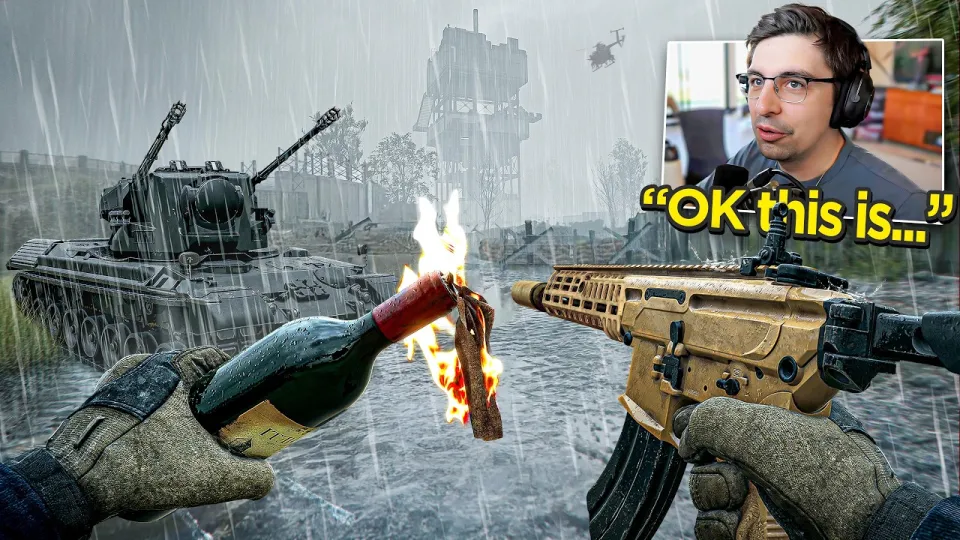
Video: Wardogs Is a Completely Different Game Now...
You can order the same kind of articles for your own video to boost it on YouTube and Google. Just message the Telegram bot @sat_sit_bot. Articles with your video embedded are written and posted by the bot itself — on popular topical sites (no ads). Free trial — 50 articles.
· based on the channel shroud
Wardogs Season 2 has added heavy rain as a live weather condition, and the change is big enough that the game plays differently from match to match. The rain cuts visibility, weakens long-range sniping and pushes fights into closer, messier ranges, which is exactly what shroud and his squad run into in the new season footage. You can catch the full stream companion audio and show via the shroud Spotify show if you want more of the squad's commentary around these sessions.
What the rain actually changes in Wardogs
The rain is not a cosmetic overlay; it is a visibility modifier that reshapes engagement distances. In clear weather a squad can hold a ridge and pick people off at long range, but once the storm rolls in, targets blur into the haze and the same sight lines stop working. Players report that even around 190 meters it can be hard to see anything clearly, which effectively deletes the long-range rifle as a reliable tool for stretches of a match.
That has three practical effects:
- Sniping becomes opportunistic rather than dominant. You take the shot when the rain lightens, not on a schedule.
- Movement between cover gets safer, because defenders cannot track bodies at distance as easily.
- Close-quarters weapons and aggressive pushes gain value, since the fight is decided inside buildings and around objectives rather than across open ground.
The rain also changes the feel of the map itself. Areas that were boring transit routes in clear weather become tense chokepoints, because nobody can see who is holding the far side.
How to adapt your loadout when the storm hits
Swapping your kit for the weather is the single biggest skill gap in Season 2. The most common mistake in the new footage is carrying the wrong ammunition into an armored fight and blaming the gun. When an opponent is wearing heavy protection, torso and head shots get eaten by armor, and the answer is to shoot the legs with hollow-point or HP rounds, which bypass the plate entirely.
A rain-ready loadout looks like this:
- HP or hollow-point ammo for close fights against armored players; aim low, not center mass.
- Armor-piercing rounds for the moments when the rain lifts and you need to punch through cover at range.
- Infrared or thermal optics where your build allows them, because they cut through the haze that blinds plain glass.
- Short-barreled or high-fire-rate weapons for building clears, since long-range duels are unreliable in the storm.
One clip in the session shows a player being told repeatedly to shoot legs, agreeing, then emptying a magazine into the torso and dying anyway before declaring the weapon terrible. The lesson is mechanical, not verbal: if the target is plated, the legs are the target.
Why squads that share one voice chat win more fights
Coordination beats individual aim when visibility drops. A server may hold around twenty players against a squad of six, but those twenty are usually scattered across separate voice channels with no shared callouts, while the six are in one channel feeding each other information constantly. In rain, where nobody can see far, that information advantage compounds.
Practical habits that pay off in the storm:
- Call out compass directions and building names, not vague phrases like "over there."
- Announce reloads and pushes so teammates can cover the gap.
- Assign one person to watch the flank that the rain is hiding.
- Consolidate onto one objective instead of spreading thin, because a scattered squad cannot see enough to react.
Base-building matters here too. Squads that fortify a position and hold it through the storm force attackers to come to them through the worst visibility, which flips the usual advantage.
Recoil control and gun handling in low visibility
Recoil control separates good players from great ones, and the rain punishes sloppy spray patterns because you get fewer clean reads on where your shots land. Watching a top-tier player like shroud work a weapon shows how much of the fight is decided before the trigger is pulled: pre-aim, burst length and reset timing all matter more when you cannot see the impact.
Three drills that transfer directly to rainy matches:
- Practice controlled bursts at 50 to 100 meters rather than full-auto sprays.
- Learn each weapon's first-shot recoil so your opening round lands where you aimed.
- Repack magazines during downtime, not mid-push; opening your inventory while dropping into a contested building is how you die to the person who just shot you.
That last point comes up repeatedly in the session, where a player calls out an enemy inside a building, drops in, stops to manage ammo mid-fall, and gets killed by the same opponent. Inventory management is a pre-fight task.
Common questions from players trying the new weather
The biggest recurring doubts from viewers watching Season 2 gameplay are about whether the rain is a permanent change, how it affects sniping, and whether optics still matter.
- Is the rain random or scripted? It behaves as a dynamic weather condition that rolls in during matches, so the same map plays differently depending on timing.
- Does sniping still work? Yes, but only in windows. Treat long shots as opportunistic and keep a close-range backup ready.
- Are thermal and infrared optics worth it? In rain, they are among the strongest attachments you can run, because they restore some of the visibility the storm takes away.
- Why does my gun feel weak? Usually it is ammunition choice, not the weapon. Check whether you are running HP rounds against armored targets and aiming at limbs.
Where to find the full Wardogs session and shroud's other content
All the official links from the stream are collected here so you can follow the squad and the creator's setup in one place.
- Spotify show: https://open.spotify.com/show/033FeLGJ1Oru4PqmmzAsjO
- Logitech G (promo code shroud on products): https://www.logitechg.com
- Maingear PC build: https://maingear.com/shroud-ref
- Twitter: https://twitter.com/shroud
- Twitch: https://www.twitch.tv/shroud
Final thoughts on Wardogs Season 2
Season 2's rain is the kind of update that does not just add content but changes how every existing system is used. Visibility drops, sniping loses its throne, ammunition choice decides fights and coordinated squads pull ahead of scattered lobbies. The players who adapt their loadout and their callouts fastest will be the ones who thrive in the storm. For more of this kind of session breakdown, follow shroud, whose channel is the source of the Wardogs gameplay discussed here, and subscribe to the shroud Spotify show for the companion audio.
Key takeaways
- Wardogs Season 2 introduces dynamic heavy rain as a new weather condition that changes visibility across the map.
- Rain reduces sight lines to roughly 190 meters in places, making long-range sniping far less reliable.
- Infrared and thermal optics become more valuable in rain because they cut through the haze.
- Armor-piercing and HP ammunition matter more: hitting limbs with HP rounds is the counter to armored targets.
- Grouping in one voice chat gives coordinated squads a real edge over scattered opponents on the same server.
Source: Wardogs Is a Completely Different Game Now... · Markdown version
Questions & answers
Is the rain in Wardogs Season 2 a permanent weather setting?
No. The rain behaves as a dynamic weather condition that rolls in during matches rather than a fixed map state. That means the same location can play as an open long-range fight in clear weather and as a close-quarters brawl once the storm arrives, so you should plan for both.
Does the rain make sniping useless in Wardogs?
Not useless, but far less reliable. Visibility drops enough that targets beyond roughly 190 meters can be hard to see, so long-range shots become opportunistic. Keep a close-range weapon or a thermal optic ready for the stretches when the storm is heavy.
Why do my bullets seem to do nothing against armored players?
Armor absorbs torso and head damage, so center-mass shots feel weak. Switch to hollow-point or HP ammunition and aim for the legs, which are not protected by the plate. Many players call the weapon bad when the real issue is ammunition choice and aim placement.
Do thermal or infrared optics help in the Wardogs rain?
Yes. Because the rain reduces normal visibility, optics that cut through haze and highlight heat signatures restore part of your sight picture. They are among the strongest attachments to run during stormy matches, especially on maps with long open approaches.